PBTE Launches Two-year diploma in IT
- January 8, 2026
- 1319
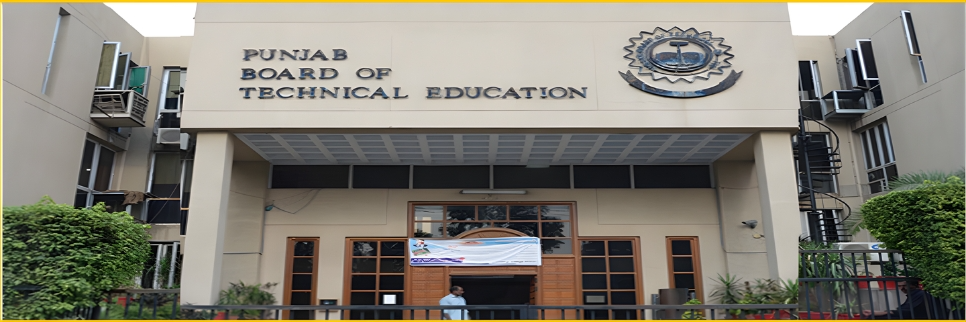
The Punjab Board of Technical Education has launched a new two-year DIT program under a semester system to modernize vocational training and prepare graduates for the fast-changing IT landscape.
Artificial intelligence-related courses will be covered in the two-year curriculum, which is divided into four semesters.
The program, according to officials, underscores PBTE's goal to encourage more involvement by educational institutions in information technology education and to match technical qualifications with changing industry requirements. The qualifying requirements and program structure have been approved by the PBTE Governing Body.
The Directorate of Public Instruction (Colleges), Punjab's approved standards allow Punjabi colleges to provide the DIT curriculum based on current registrations for DIT, Intermediate in Computer Science, or comparable qualifications.
Pakistan and China initiate Joint Oceanographic Research Cruise
The Pakistan Navy is organizing a collaborative oceanographic cruise between China and Pakistan through the National Hydrographic Office.
The National Institute of Oceanography, along with China's Second Institute of Oceanography, was conducting a scientific mission, and the navy sent PNS Behr Masah to assist. According to the Pakistan Navy, the ship is capable of carrying out geophysical and oceanographic surveys.
In Pakistan's coastal and offshore waterways, the navy declared that it still supports marine scientific research and raises awareness of maritime issues.
According to officials, the collaborative trip would help assess coastal and offshore dynamics more accurately and enhance knowledge of the maritime environment.
The National Institute of Oceanography reports that on December 12, 2025, in Hangzhou, China, the two countries signed a Letter of Agreement for cooperative cruises for marine environment and ecosystem research.
In order to gather data on marine environments and ecosystems in Pakistan's coastal regions during all four seasons, the NIO and its Chinese counterpart began collaborative excursions after the agreement.
Through the project, Pakistani scientists will be able to collaborate with Chinese researchers, examine samples in China's state-of-the-art facilities, and receive training in the use of oceanographic equipment, data gathering at sea, and post-cruise laboratory analysis.