ESEF Officially Launches Virtual Education Program In KPK
- October 10, 2025
- 1045
Khyber Pakhtunkhwa has taken a big step toward digital learning with the formal launch of the Elementary and Secondary Education Foundation's (ESEF) Virtual Education Program.
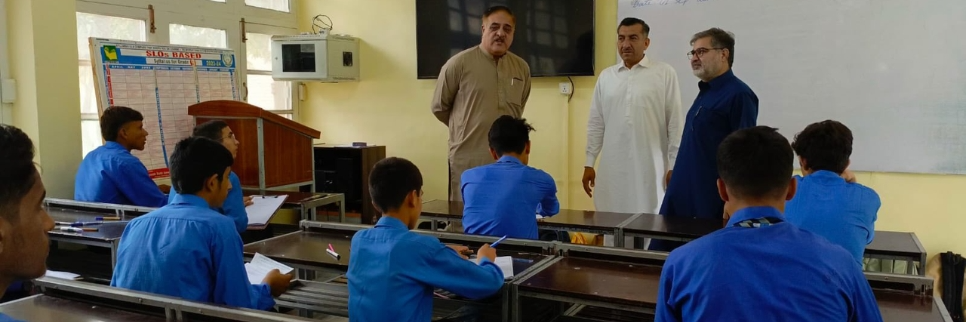
Shahab Ali Shah, the chief secretary of Khyber Pakhtunkhwa, was the main guest at the inauguration ceremony, which took place at Government Higher Secondary School in Hayatabad on Thursday.
Education specialists from throughout the province, senior department officials, and the secretary of elementary and secondary education attended the occasion.
In an interview with the media, Qaiser Alam, Managing Director of ESEF, said that the Virtual School Project is a unique government program created to address the teacher shortage in public middle, high, and upper secondary schools.
Key courses like English, Urdu, science, mathematics, physics, biology, and chemistry will be taught online using this technology for students in grades 6 through 12.
All lessons have been created in compliance with the provincial syllabus and the National Curriculum Policy (NCP), he continued, guaranteeing all students fair and high-quality educational opportunities.
The Secretary of Education stated in his speech that the first set of data was gathered from 50 schools in different districts, chosen on the basis of student enrollment and teacher shortage.
Additionally, this effort will develop an online assessment system and provide students with access to experienced lecturers' recorded lectures, enabling them to learn from home. Additionally, in order to guarantee successful implementation, the department is training teachers.
According to Chief Secretary Shahab Ali Shah, the initiative is a significant accomplishment that will transform the province's educational system. He emphasized that the Virtual Teaching Program will guarantee equitable educational opportunities for both boys and girls, particularly in isolated regions where access to schools and teacher availability have long been problems.
He added that he was hopeful the Virtual School will be extended throughout the province once it has been successfully implemented in a few regions, potentially increasing literacy rates quickly with low resources.