Planning Minister seeks 10,000 PhD scholarships for Pakistani students
- September 30, 2025
- 1273
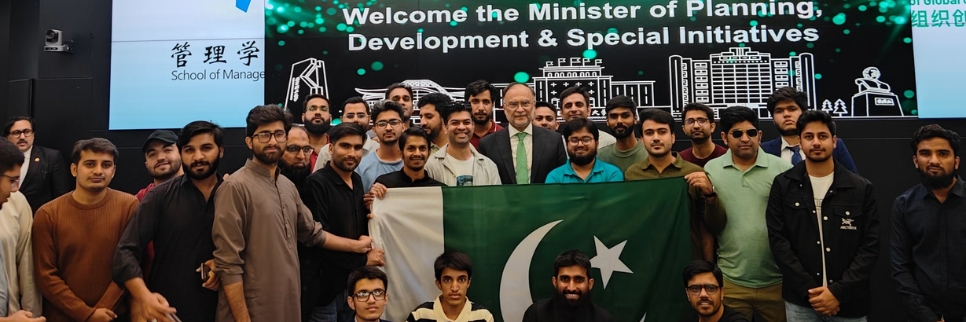
Professor Ahsan Iqbal, Minister for Planning, Development, and Special Initiatives, has suggested 10,000 joint PhD scholarships in engineering, emerging sciences, and artificial intelligence at China's best universities under CPEC Phase II.
He cites the need to prepare Pakistan's youth for knowledge-driven growth.
He gave a briefing to the media following the 14th meeting of the CPEC Joint Coordination Committee (JCC), which was broadcast from Beijing on Saturday.
He stated, "We have proposed that 10,000 Pakistani students be trained in artificial intelligence, emerging sciences, engineering, and new technologies in China's top 50 universities in the next 10 years so that Pakistan can build a strong technology- and innovation-based economy."
Giving young people cutting-edge research skills would allow them to lead Pakistan's economic transformation into a $3 trillion economy by 2047, Ahsan emphasized.
He said, "The youth of Pakistan own the next two decades, and we are dedicated to investing in their education and skills so they can lead the nation's economic transformation."
According to him, the planned "knowledge corridor" with China will aid in the establishment of top-notch human resources for the development of the future economy.
Simultaneously, the minister stated that Pakistan intended to increase collaboration with China in the field of vocational and technical education, utilizing China's expertise to teach the nation's labor force cutting-edge technology for job prospects.
Iqbal referred to exports as the “engine of growth” and highlighted the urgent need to improve Pakistan’s poor export performance.Pakistan barely imports $3 billion of China's $2 trillion worth of goods.By requesting the same tariff treatment for Pakistani goods as ASEAN nations, we intend to broaden this, he continued.
Additionally, the establishment of collaborative labs in AI and quantum computing, as well as the introduction of a CPEC Future Skills program in biotechnology, robotics, finance, and IT, were considered by both parties.
The minister stated that in order to prepare Pakistani youth for jobs, collaboration would also increase in vocational and technical education.
He underlined that small business owners, laborers, and farmers must all benefit from development while also taking advantage of China's expertise in reducing poverty.
Pakistan has suggested using Chinese support to turn one underdeveloped district per province into a socioeconomic development model.