“Godfather of AI” says intellectually repetitive jobs will disappear.
- June 24, 2025
- 1142
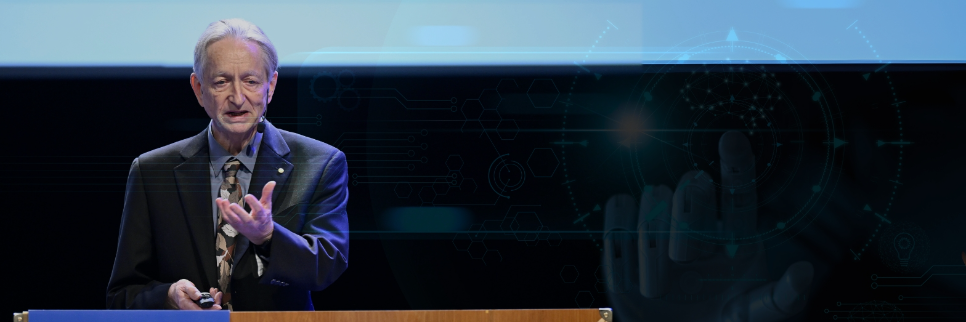
Geoffrey Hinton, a professor emeritus at the University of Toronto famously called as the "Godfather of AI," claims that the AI technology is about to cause profound changes in the labor market, putting many workers at risk of being replaced by machines.
Hinton stated in a recent interview on the Diary of a CEO podcast that AI will replace everyone for routine intellectual labor. He cautions that the occupations most at risk right now are paralegals and call center employees.
According to Hinton, who exited Google in 2023 to openly discuss the dangers of artificial intelligence, the effects are already being seen.
I believe that the unemployment rate poses a serious short-term threat to people's happiness. Even if they receive universal basic income, he told podcast host Steven Bartlett, "Many people will not be happy if you make them unemployed."
The rapid advancement of AI has been clearly visible in recent months. In the US, a TV ad created solely with AI ran during the NBA Finals. The advertisement only cost US$2,000 and took a little more than two days to create. It didn't require any actors or a human production staff. It emphasizes the potential for generative AI to upend sectors that were previously believed to be impervious to automation.
There are already indications from large corporations that change is imminent. The CEO of Amazon, Andy Jassy, informed staff last week that the business anticipates "reducing" its corporate personnel as it implements AI tools.
Jassy called AI "a once-in-a-lifetime technology" in a memo, saying that we will need more people performing different kinds of professions and fewer people doing some of the occupations that are being done today.
The cautions don't stop with Amazon. Up to half of entry-level white-collar occupations might be eliminated by AI within the next five years, according to Dario Amodei, CEO of the AI business Anthropic. This could result in unemployment reaching 20%. Amodei warned that governments and workers alike must get ready for a swift transition from AI-enhanced to totally automated labor.
However, Mark Daley, chief AI officer at Western University, is less worried.
"I believe he's correct when he says that there are risks associated with all white-collar jobs," Daley says. Although I don't believe they face extinction, the nature of their work will undoubtedly change significantly in the near future.
AI will eventually create more jobs than it will kill, according to some tech industry insiders, but others are not convinced.
The economists will always tell you that whenever there is a change in technology. "There are more jobs created than destroyed," Daley added. But no technological advancement has resulted in the creation of thinking machines.
Hinton is also skeptical about the emergence of a new wave of jobs to make up for the losses.
"This type of technology is drastically different," he stated. If it can perform all routine intellectual labor, what new employment will it generate? It couldn't do your work; you would need to be extremely talented.
Recent college graduates are experiencing the effects. According to Daley, people who studied computer science or other technical subjects are having more difficulty than typical getting their first jobs. The reluctance to hire for jobs that may be automated or performed by fewer people collaborating with AI helpers, according to experts, may be partly to blame.
Regarding which occupations are most likely to be "AI-proof," experts say that those that need human connection, such as those in the performing arts and healthcare, are less likely to be affected.
Daley stated, "We'll always want to see humans perform because we're human."
Since AI won't be able to physically manipulate objects for a while, Hinton advises anyone looking for secure employment to "train to be a plumber."