Malala comes forward with $230,000 grant for schools in flood-hit areas
- September 17, 2025
- 1498
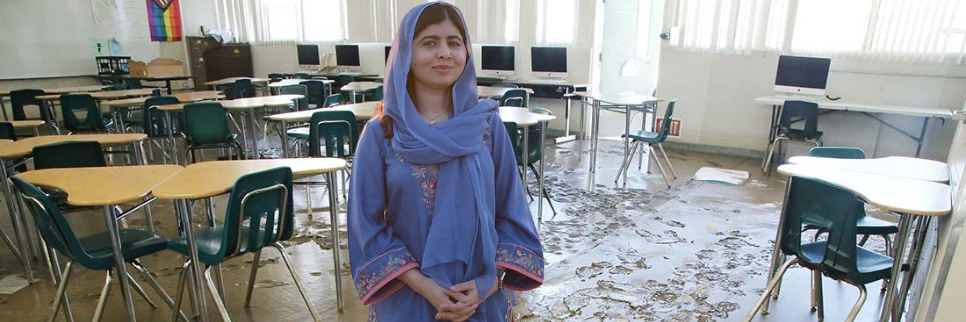
Malala Yousafzai, a Nobel Peace Prize laureate, has declared a $230,000 fund for children impacted by the recent catastrophic floods in Pakistan.
The funding aims to restore access to education by supplying essential items such as books, uniforms, and school materials for children who have been displaced and affected.
Malala disclosed in a video message that Idara-e-Taaleem-o-Agahi will receive a grant of $200,000, while the Mountain Institute for Education and Development (MIED) will receive $30,000.
Both organizations will use the money to help kids continue their education when they return to school.
Malala emphasized that the floods have destroyed several schools, leaving thousands of children without access to educational resources.
She emphasized how crucial it is to give education top priority during the rehabilitation process and cautioned that kids shouldn't be left behind.
Malala expressed her sympathies and sent her deepest condolences to the entire Pakistani people during this difficult moment.
Despite such devastation, she said, education must continue to be a top focus in order to prevent children from falling behind.
Rains Havoc in the World
A recent UNICEF analysis shows that last year alone, extreme weather events like heatwaves, storms, floods, and cyclones caused almost 242 million pupils in 85 countries to miss school.
Africa was devastated by the El Niño weather phenomenon, a climate event that warms the surface water in the central and eastern Pacific Ocean and produces extreme weather. The event caused droughts in the south and floods in the east.
Richer countries weren't exempt either; thousands of pupils were forced to leave their schools due to heavy rainfall in Spain and Italy. The same survey claimed that South Asian climatic calamities caused 128 million children' educations to be derailed.
Three-fourths of the impacted children came from lower-middle-income nations, where educational systems are already trying to keep up, according to the data.