


What Was Before The Big Bang: Science against Philosophy
- October 27, 2025
- 953
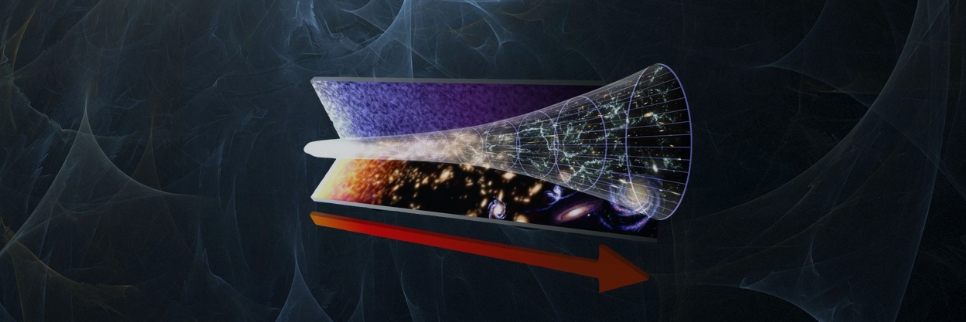
The biggest question in the universe has always been where everything came from. The Big Bang theory certainly explained that the universe expanded from an extremely dense and hot state about 13.8 billion years ago, but the question remained: what was there before this big bang?
For centuries, humans have been trying to figure out how "everything" emerged from "nothing." Philosophy has provided many answers, but science has yet to crack the mystery. However, modern research is now suggesting that we may be getting closer to unlocking the secrets of this mystery.
The Big Bang and the Limits of Science
The Big Bang model describes the beginning of the universe, but at that point all the equations break down. Einstein's theory of general relativity explained the curvature of space and time, how matter and energy bend space, and how the universe evolves. But the problem is that as soon as we try to go back in time to the very beginning of the Big Bang, the equations start to give infinite results. The density and temperature increase so much that the mathematics becomes unmanageable. At this point, scientists have found a new way, called "numerical relativity."
Numerical relativity and supercomputers
Numerical relativity is actually the name for solving Einstein's equations step by step on a computer. This technique was used in the study of black holes. When two black holes collide, they produce gravitational waves. These waves were predicted by computers in advance, and when LIGO (Laser Interferometer Gravitational-Wave Observatory) detected them in 2015, it was found that the computer's prediction was not even a moment ahead of reality.
This was the moment when man first tested Einstein's theory directly through experiment. Now scientists are using the same technique to understand the beginning of the universe. The question is, what happened before the Big Bang? Did the universe collapse to a single point, or was it actually the beginning of another cycle?
Cosmic bounce theory
Some scientists say that the universe was created through a "cosmic bounce." That is, it first contracted, then exploded at a certain point, and thus a new cosmic era began.
Astronomer Roger Penrose, in his theory of "Conformal Cyclic Cosmology," has stated that the universe is repeatedly created and destroyed, and the Big Bang was actually the beginning of a new cycle.
Multiverse
Some experts believe in a “multiverse,” where countless universes exist together, and our universe is like a bubble in one of them. When these bubbles collide, their signatures can be hidden in the cosmic microwave background (CMB). In 2018, data from the European Space Agency’s (ESA) Planck satellite indicated that the CMB may contain spots that are the signatures of other “cosmic bubbles” colliding.
Cosmic Strings
So too is the theory of “cosmic strings,” which are thought to be thin, infinite lines of energy that were created in the early universe. If they really existed, they would have left a unique signature of gravitational waves. Research published in 2023 in the Journal of Cosmology and Astroparticle Physics suggests that next-generation gravitational wave detectors could be able to detect the effects of these hypothetical strings.
Cosmic inflation
Another great destination of human curiosity is the “expansion of the universe.” This is the theory that, immediately after the Big Bang, the universe expanded millions of times in a billionth of a second. This expansion made the universe smooth and uniform, and that is why today the sky looks almost the same in every direction. Scientist Alan Guth proposed this theory in 1980.
But the question is, did this inflation really happen? Most theoretical studies assume that the universe was already smooth, then inflation made it more orderly. But through computer simulations, it is now possible to test whether the process of inflation can smooth out the universe even if it was initially disordered and chaotic.
And if so, when and how? In 2014, the BICEP2 experiment claimed to have seen signs of "primordial gravitational waves" that were evidence of inflation, but it later became clear that this was actually the effect of cosmic dust. This showed that this theory has not yet been definitively proven.
But here a philosophical question also arises. If there was something before the Big Bang, what was it? And if there was nothing, how did "everything" come from "nothing"? Scientists may say that we are solving equations and creating models on computers, but the definition of "nothing" itself is the biggest challenge for science, because nothing means neither space nor time nor laws, so where did all this come from?
Science v/s Philosophy
This is where science and philosophy meet. Some experts, such as Lawrence Krauss, have written in his book A Universe from Nothing that in "quantum mechanics," nothing is actually not an empty state of space but a "quantum vacuum" full of energy fluctuations. Particles come into and disappear from this vacuum moment by moment, and perhaps the creation of the universe was also the result of such fluctuations.
Theories on the creation of the universe have changed over time. Sometimes it was considered eternal; sometimes it was considered the result of some supernatural force. Today, science says that we can examine how the universe came into being based on experiment and observation.
The Big Bang is a great model, but it's not the complete answer. With the help of numerical relativity and supercomputers, we're getting the chance to look back to the earliest moments and perhaps figure out what was driving the Big Bang.
If this research is successful in the coming years, humanity will be close to giving a scientific answer to the question that has been in the human mind for thousands of years for the first time. The result of all this research is that man is reaching these questions through his intellect and technology. This journey is not over yet. As computers become more powerful and mathematics becomes more sophisticated, we will gradually get closer to this great secret of "everything" from "nothing."


